
A framework for assessing and deepening Human Learning Systems practice
As more places explore Human Learning Systems approaches, one of the recurring questions we hear is how to understand what this way of working looks like in practice – and how you can embed your HLS approach beyond isolated pockets of innovation, to ensure better outcomes and more effective support for people and places.
Collaborate CIC is today launching an HLS Maturity Diagnostic Framework and accompanying support offer. It is designed to help organisations, partnerships and places to assess HLS ways of working that are already emerging, and identify where there are opportunities to deepen practice, and what conditions are needed to support broader systemic change over time.
About the framework
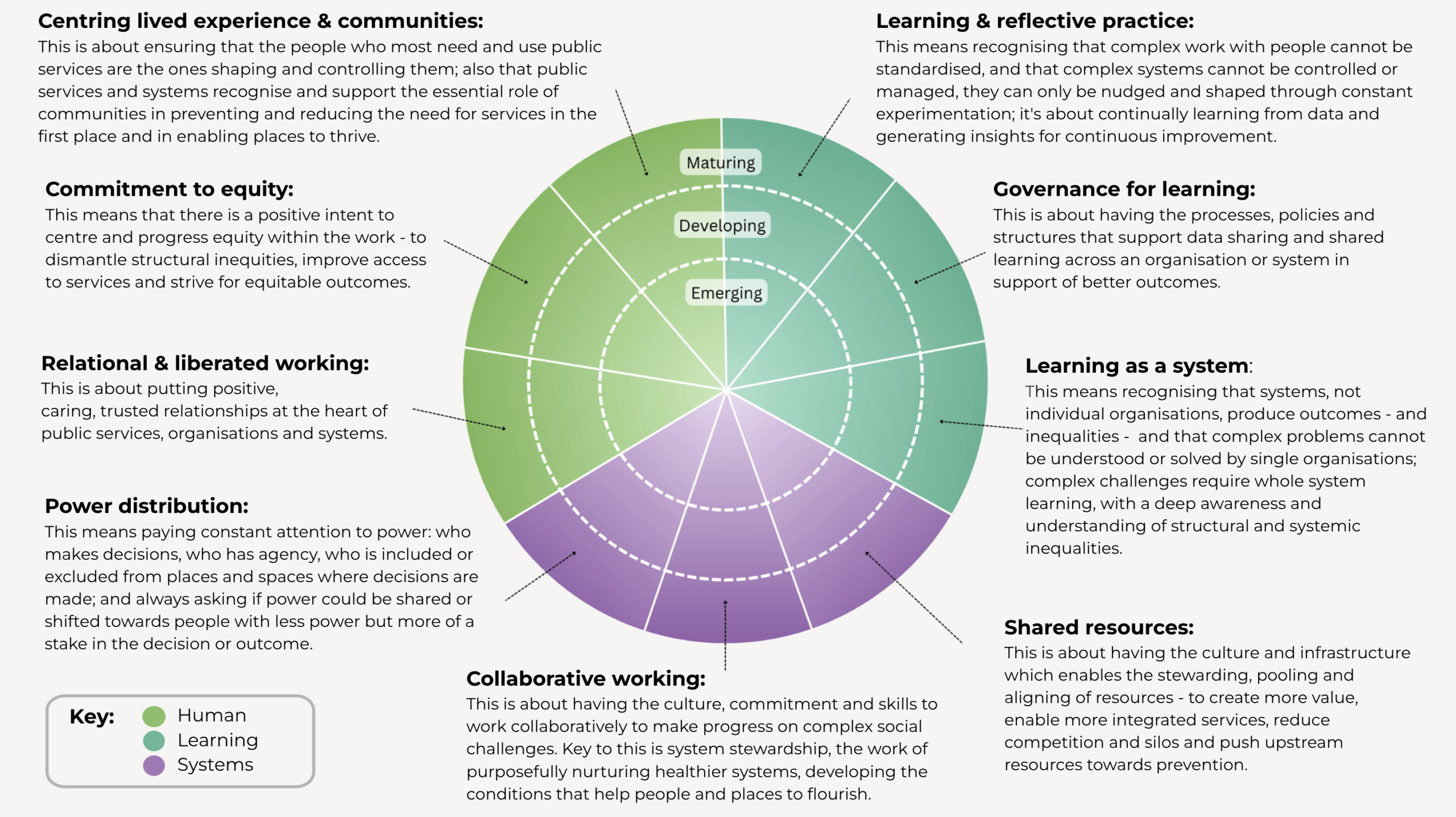
The framework is organised around three the core domains of Human, Learning and Systems.
Across these domains, it explores nine features of practice covering relational, adaptive-learning and whole-systems, collaborative approaches to public service.
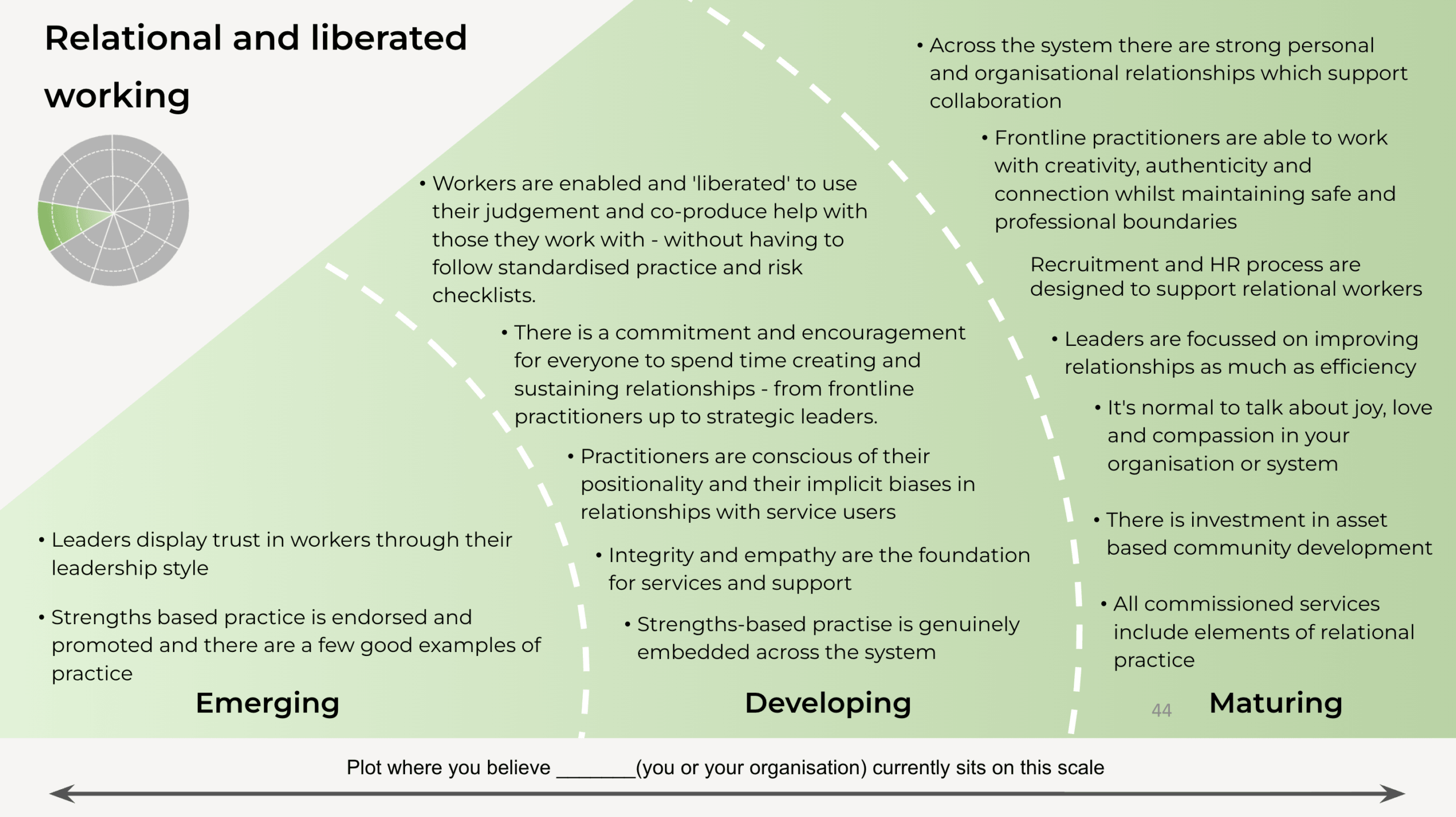
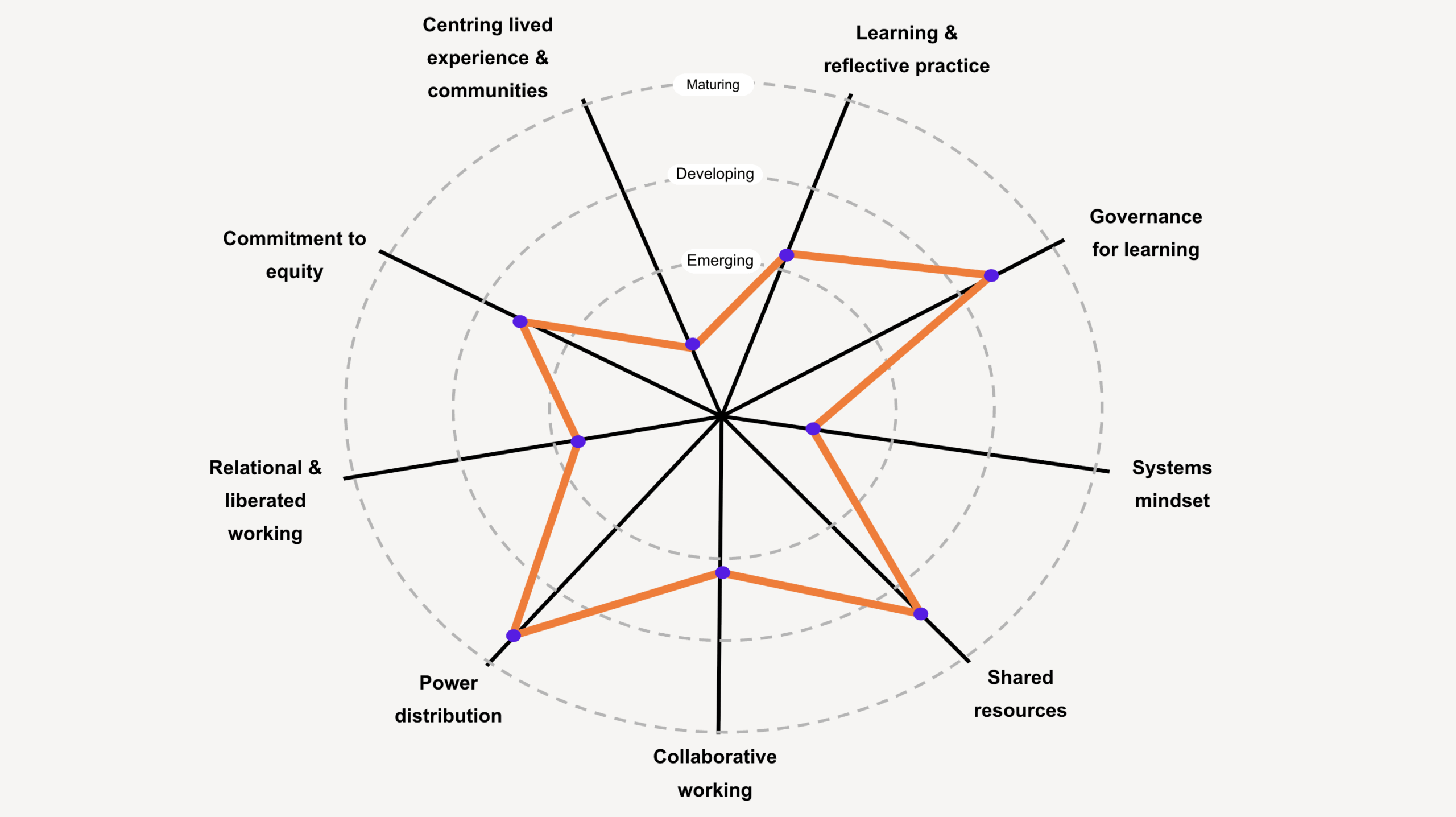
Each section includes descriptions of emerging, developing and maturing practice, alongside reflective questions and opportunities for discussion and self-assessment. This allows you to better understand where you are on your HLS journey and how to move forward.
Why we developed it
In recent years, we’ve seen growing interest in Human Learning Systems approaches across public services, civil society and philanthropy and.
Many places are already experimenting with more relational and adaptive ways of working. But often this practice remains fragmented, sitting within individual teams, programmes or partnerships rather than embedded across wider systems and cultures.
We developed this framework to support places to step back and look at the bigger picture, to identify:
- where good practice already exists and could be spread
- areas for development
- what may constrain and enable you embedding and spreading HLS practice more widely.
Its focus is not simply maturity in the abstract, but identifying practical ways to move forward with relational, adaptive and collaborative approaches which lead to better outcomes for residents.
A look inside the framework
Click through the three images below to explore example reflection prompts and maturity indicators from the HLS Maturity Diagnostic Framework.
Testimonial
I used the maturity framework […] it was excellent and gave ‘results’ very similar to our ‘sense’ of the place. It was easy to use by staff to self-assess and then by me to check. Incredibly useful!
Gary Wallace
Gary is a Senior Public Health Specialist in the Public Health Directorate at Plymouth City Council and a co-leader of The NIHR Health Determinants Research Collaboration (HDRC) Plymouth. Gary has been a key influence on the development of HLS, within Plymouth and nationally.
How to access the Framework
Collaborate CIC is here to support you – as an organisation, partnership or place – to assess your HLS practice, recognise areas of strength and areas of potential and help you map out a plan of action.
Please get in touch if you’d like a conversation about how we can support you to use the HLS Maturity Diagnostic Framework, by contacting [email protected]